.png)


Stop Customer Bounce Rates with Predictive Data Fetching


In the competitive world of e-commerce, speed is the main factor shoppers respond to. If your website makes a customer wait, they will leave. This exit, known as a bounce, negatively impacts your revenue and search engine ranking. However, a new technology called predictive data fetching is changing the game.
By guessing what a user wants next, you can make your site feel like it loads in the blink of an eye. This guide explains how to utilize this technology for AI-driven Shopify store optimization, ensuring your customers remain happy and continue to make purchases.
What is Predictive Data Fetching?
Predictive AI helps websites prepare content before a shopper clicks. Instead of waiting for an action, the browser quietly loads likely next pages in the background.
It studies user behavior, cursor movement, and past patterns to make smart guesses. For example, when a shopper hovers over a “View Product” button, the system assumes a click may happen. It immediately starts loading product details like images, price, and descriptions. When the click happens, the page opens almost instantly.
This approach removes loading delays and avoids visible waiting time. Each page transition feels smooth and uninterrupted. In fast-moving online stores, this speed difference keeps users engaged and browsing longer.
The Psychology of the Bounce
Why do people leave? Most of the time, it is because of friction. If a page takes more than three seconds to load, 40% of people will quit. They feel frustrated and lose trust in your brand. Predictive fetching acts as a safety net. It ensures that the content is ready before the frustration begins. When your site reacts as fast as a person thinks, they stay longer and view more products.
How Predictive Tech Powers AI Shopify Store Optimization
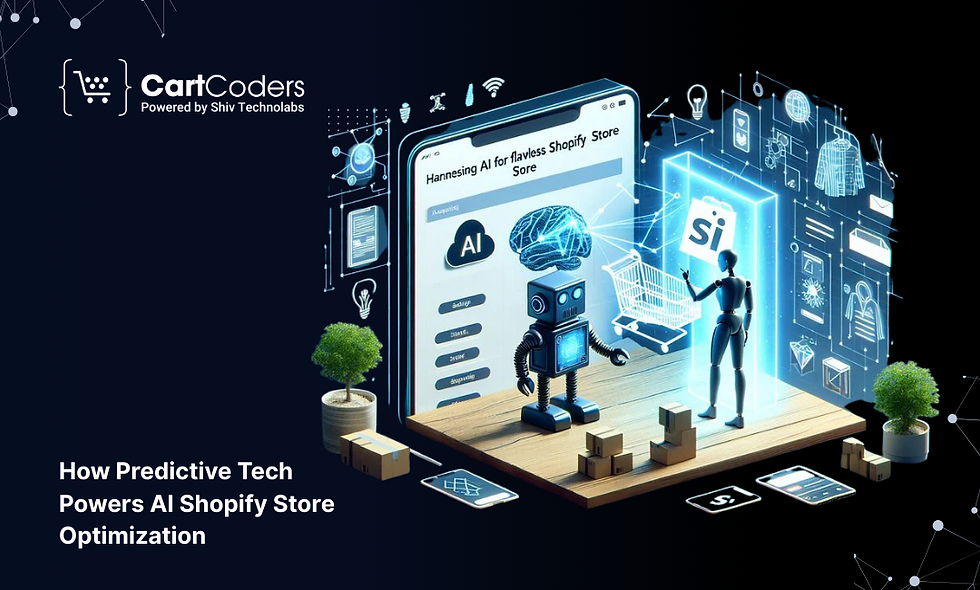
Using artificial intelligence to manage data fetching takes performance to a higher level. Standard prefetching might load every link on a page, which can slow down the server.
However, AI Shopify store optimization uses smart algorithms to decide exactly which data to grab.
1. Smart Hover Triggers
The most common way to fetch data is via hover triggers. When a user moves their cursor toward a product image, the system starts a small request. It fetches the product title, price, and primary images. This way, the product page appears to load the moment the user clicks.
2. Behavioral Mapping
AI can look at thousands of past sessions to find patterns. It learns that 70% of people who visit the homepage go to the "New Arrivals" section next. Based on this, the AI pre-loads the "New Arrivals" data as soon as the homepage finishes loading. This proactive approach is a core pillar of modern AI Shopify store optimization.
3. Connection-Aware Loading
Smart systems check the user's internet speed. If a customer is on a slow 3G mobile network, the AI will not pre-load heavy images. It only fetches essential text data. This saves the user's data plan while still speeding up the experience.
Reducing Bounce Rates with Instant Transitions

The link between speed and bounce rate is clear. A "bounce" happens when someone visits one page and then leaves without any other action. High bounce rates tell Google that your site is not helpful.
Creating a "Flow" State
When pages load instantly, users enter a "flow" state. They move from a collection page to a product page and then to the cart without any pauses. Each fast load builds momentum. Predictive fetching keeps this momentum alive. It prevents the "stop-and-start" feel that plagues many online shops.
Improving Mobile Retention
Mobile users are the most likely to bounce. They often shop on the go with unstable signals. AI Shopify store optimization focuses heavily on mobile users by using "lazy prefetching."
This technique loads only the data for the items currently visible on the small screen. It makes your mobile site feel as fast as a native app.
Technical Steps for Better Store Performance
To get the most out of AI Shopify store optimization, you must follow a clear plan. It is not just about adding one script. It is about a total strategy.
Audit Your Scripts: Check which apps are slowing down your site. Remove any that you do not use.
Enable Speculative Rules: Use the new Speculation Rules API to tell the browser which pages are most important.
Compress Your Assets: Even with predictive fetching, your files should be small. Use WebP formats for all images.
Prioritize Above-the-Fold Data: Make sure the top of your page loads first so the user has something to read while the AI fetches the rest.
Measuring Success
How do you know if it is working? Watch your Core Web Vitals. Specifically, look at "Largest Contentful Paint" (LCP) and "Interaction to Next Paint" (INP). If these numbers go down, your AI Shopify store optimization is succeeding. You should also see your average session duration go up as people spend more time browsing.
The Future of E-Commerce Performance
The era of "click and wait" is over. As more brands adopt AI Shopify store optimization, customers will expect every site to be instant. Predictive fetching is no longer a "nice-to-have" feature. It is a requirement for anyone who wants to rank high and sell more.
Staying Ahead of the Curve
Google's algorithms continue to favor user experience. Sites that use predictive tech often see better rankings because their users are more engaged. By adopting these tools now, you gain a massive advantage over competitors who still rely on old, reactive loading methods.
Why This Matters for Your Bottom Line
At the end of the day, a lower bounce rate means more money. If you can stop just 10% more people from leaving your site, your revenue will climb. Predictive data fetching is an investment in your brand's future. It proves to your customers that you value their time.
Build a Faster Shopify Store with CartCoders
Creating an instant shopping experience needs strong technical planning and clean execution.
CartCoders focuses on Shopify performance, speed, stability, and conversion-focused optimization.
Our team applies predictive data fetching and modern performance methods that reduce delays.
What you get with CartCoders Shopify optimization services:
Predictive data fetching for near-instant page transitions
Hover-based and behavior-driven preloading logic
Mobile-first performance tuning for weak network conditions
Core Web Vitals improvements for SEO and UX
Lightweight Shopify themes with reduced script load
Continuous performance tracking and optimization
If your store faces slow loads or rising bounce rates, expert execution makes the difference.
CartCoders builds Shopify experiences that stay fast, stable, and scalable during traffic peaks.
👉 Contact us to discuss how predictive optimization can reduce bounce rates and increase conversions.
Conclusion
Stopping bounce rates is about more than just a fast server. It is about anticipating the human on the other side of the screen. By using AI Shopify store optimization and predictive fetching, you remove the barriers to buying. You create a smooth, pleasant journey that leads directly to the checkout button.
Do not let your hard-earned traffic go to waste because of a slow site. Start looking at predictive tools today. Test how hover triggers affect your speed. Monitor your data. Most importantly, keep the user's needs at the center of every choice you make. When you do this, your store will not just survive; it will thrive in the busy world of online retail.
Comments